HISTORY
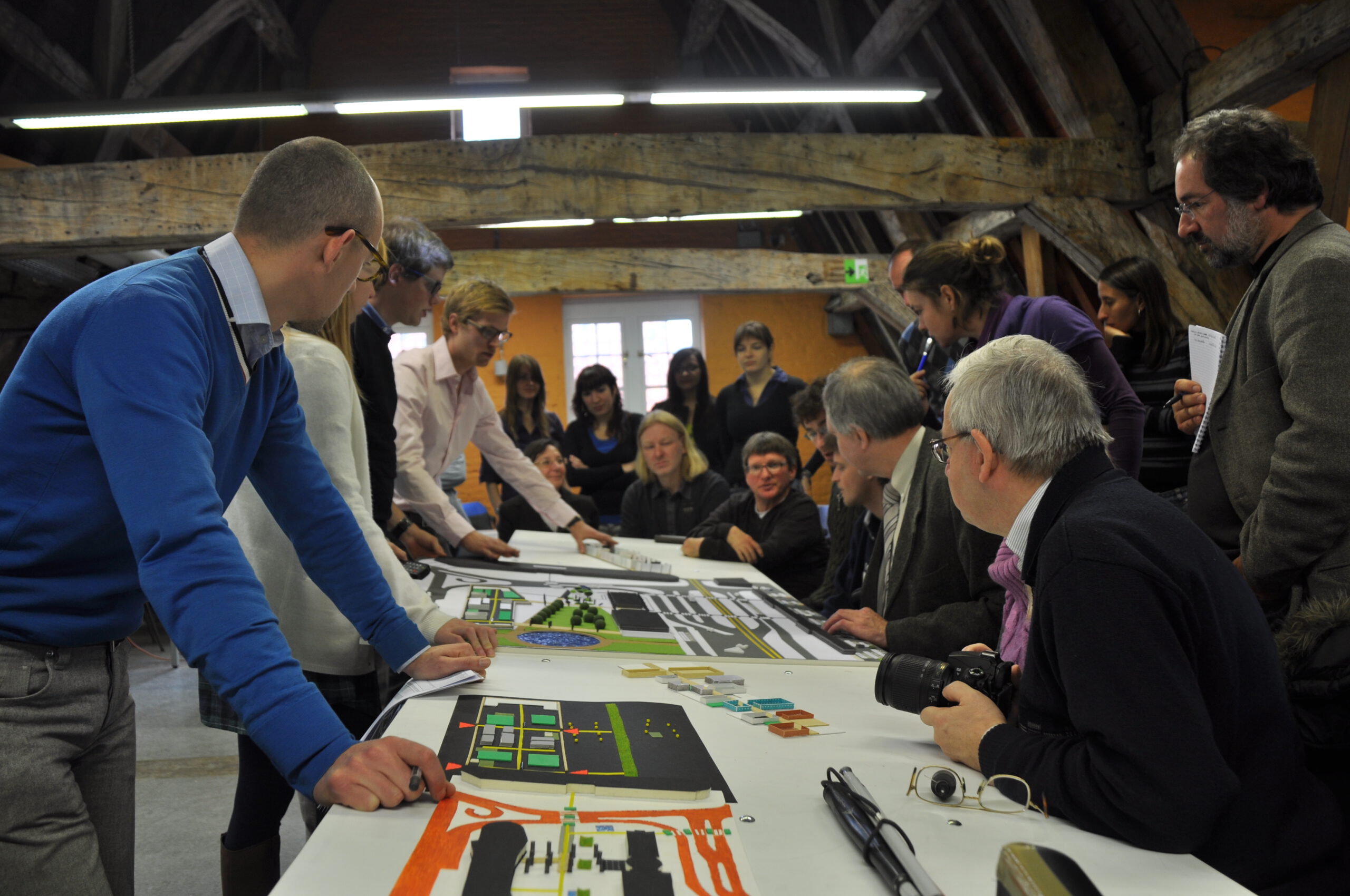
The international workshops “Designing In the Dark (DID) and “Designing the Multi-Sensorial City (DMSC) under the supervision of prof.dr.arch. Marc Dujardin (KU Leuven) provided the right platform to teach Universal Design to architecture students.
Students and user experts work together to research and design new, inclusive and accessible architecture. Several locations in Ghent (sponsor) were selected as testcases.
All ideas and designs were presented in tactile models, some equipped with audio information and tested by the user experts.
FROM WORKSHOP TO UD APP
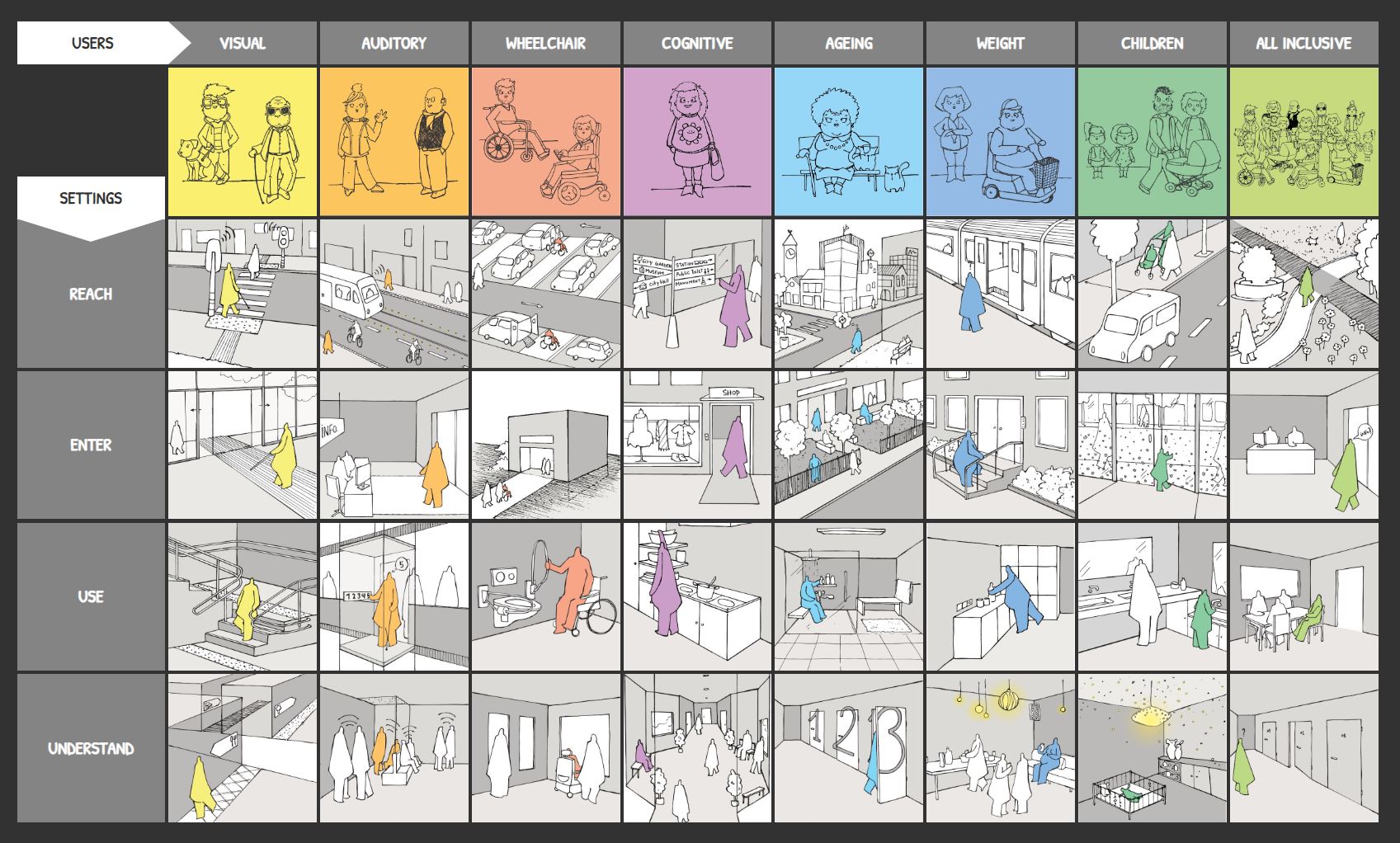
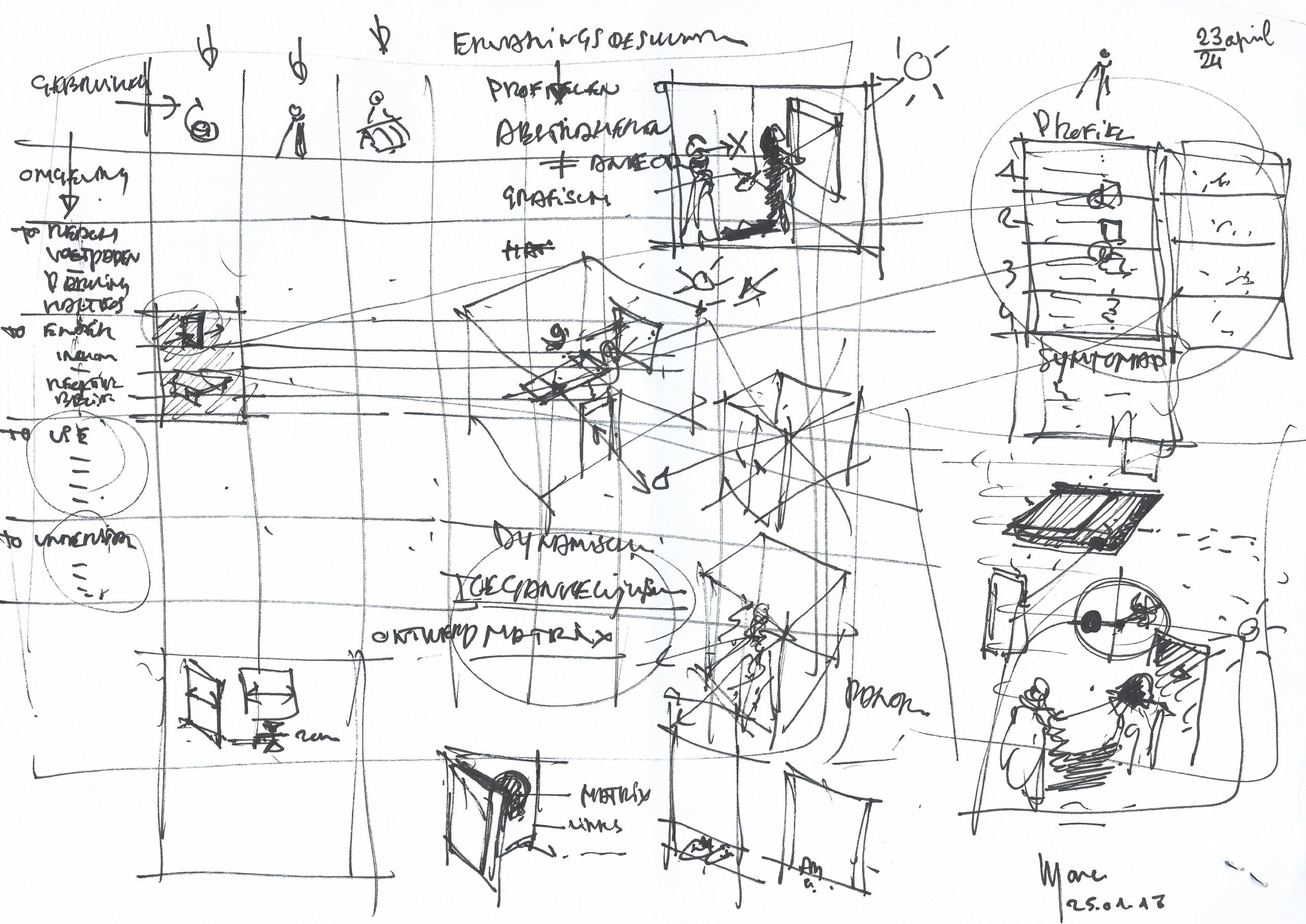
Looking back to more than one decade of close encounters and co-operation between young designers and a diversity of enabling and or dis-enabling accessibility experts, the Faculty started in 2013 with the UD-APP workshops. Based this treasure of information about architecture and user orientation, the ultimate goal is to develop a digital design tool that enables every designer to position him/herself into the situation of one or more profiles of potential end users. Prof.dr.arch. Marc Dujardin and arch. Robin Julien created the first sketch of how the app could connect user profiles to the chain of accessibility. A matrix system was chosen as the best visual representation for this.
PROTOTYPE
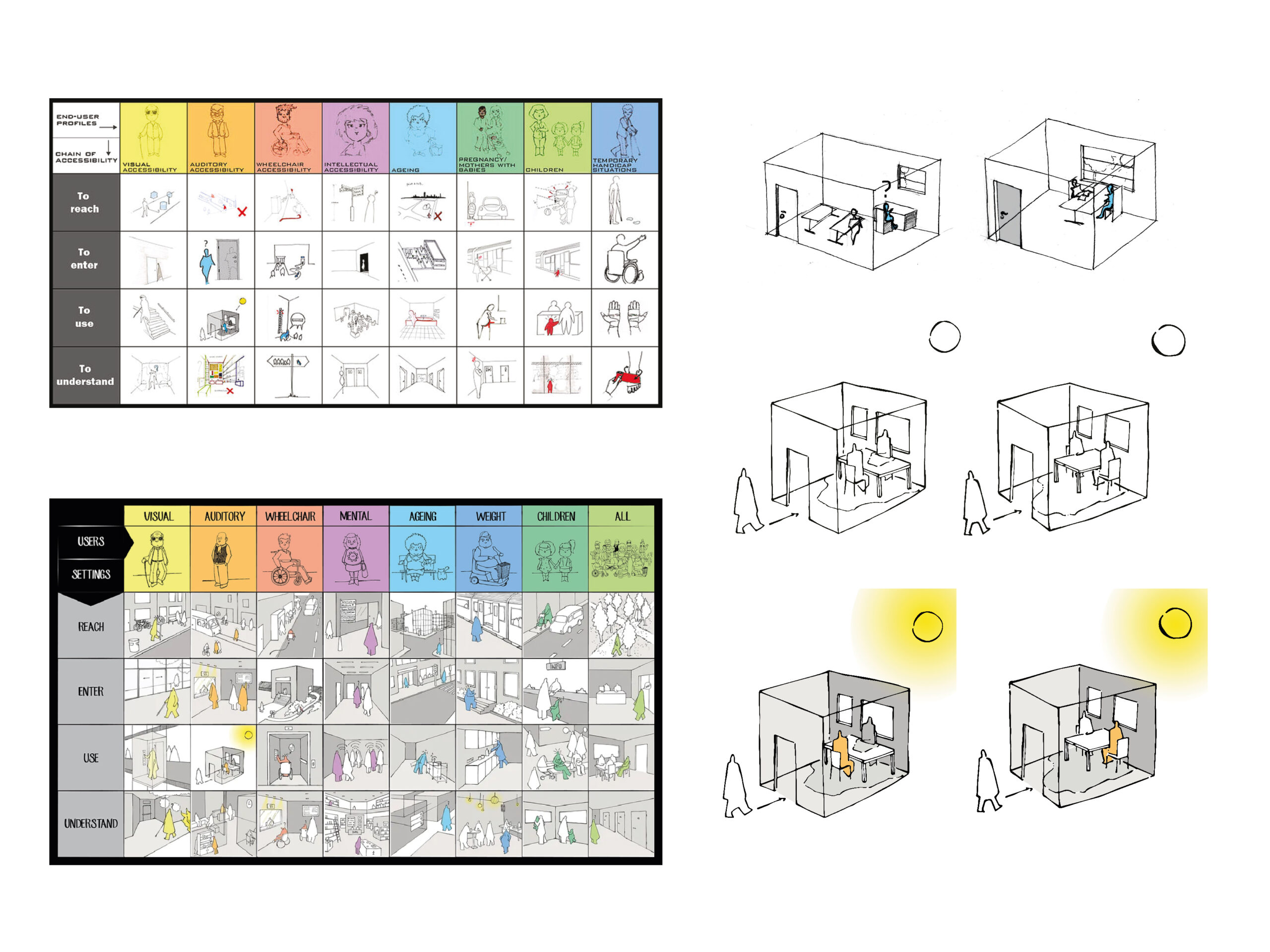
The first version was developed during the UD-APP workshop (Nov. 2013) involving students of architecture of the international Master of Architecture, campus Ghent. In the workshop of November 2014, the first ‘peer review’ was undertaken at the site of the Ghelamco Arena (Football stadium) of Ghent by both students of Architecture and students of Cultural Anthropology, selected from the course ‘Disability Studies’, tutored by prof. dr. Patrick Devlieger thereby celebrating interdisciplinary research within the KU Leuven.
UD APP
After the first prototype was built students starting testing out the usability of the toolkit. They used the UD APP to evaluate their design, learning from the input of the user experts in the form of good and bad sketches. This testing phase showed us what things could be improved and also added missing situation sketches. The final result is a digital toolkit and empathy guide for designers and architects. This is only the beginning and we want to keep adding and improving situation sketches.