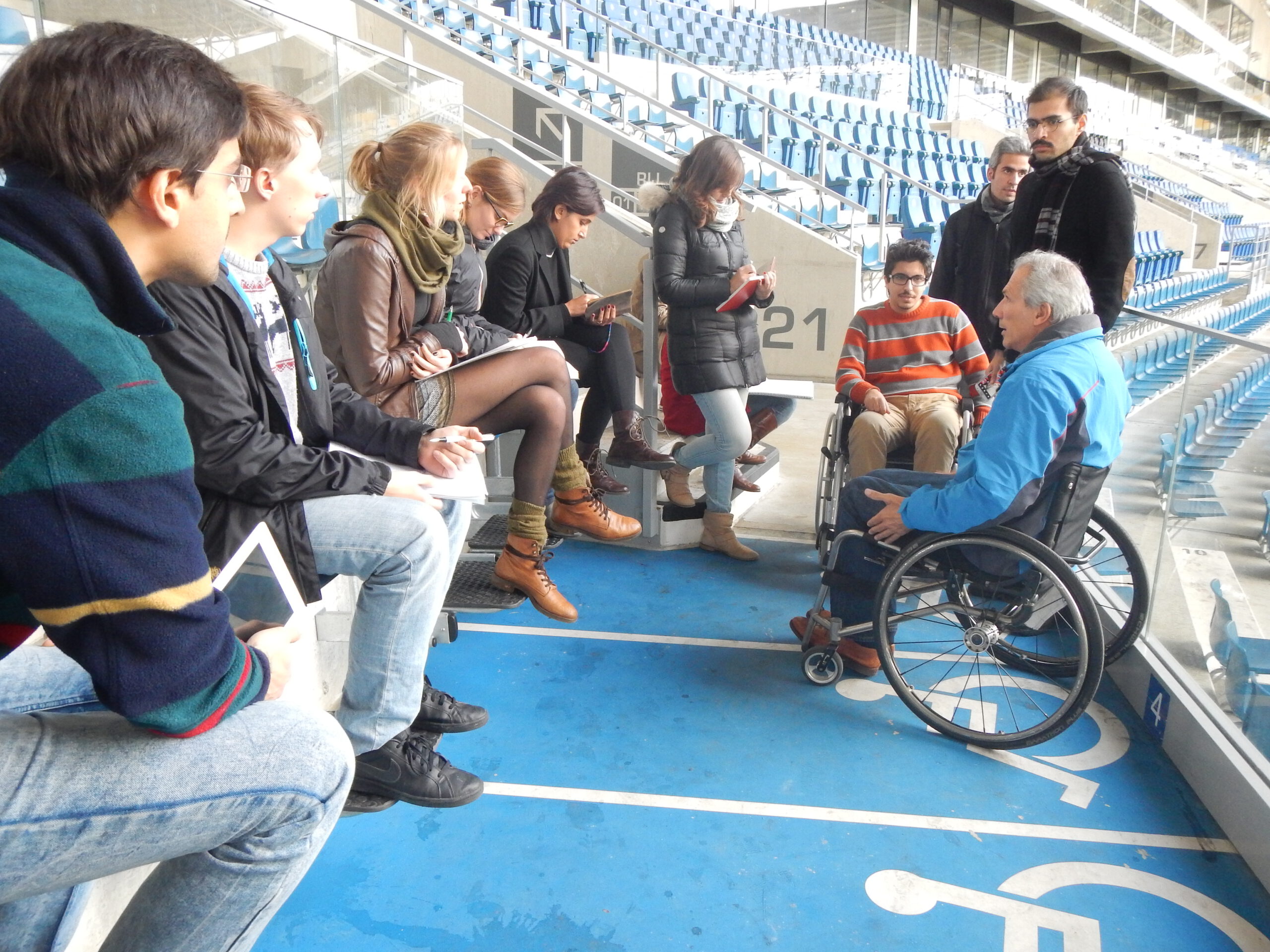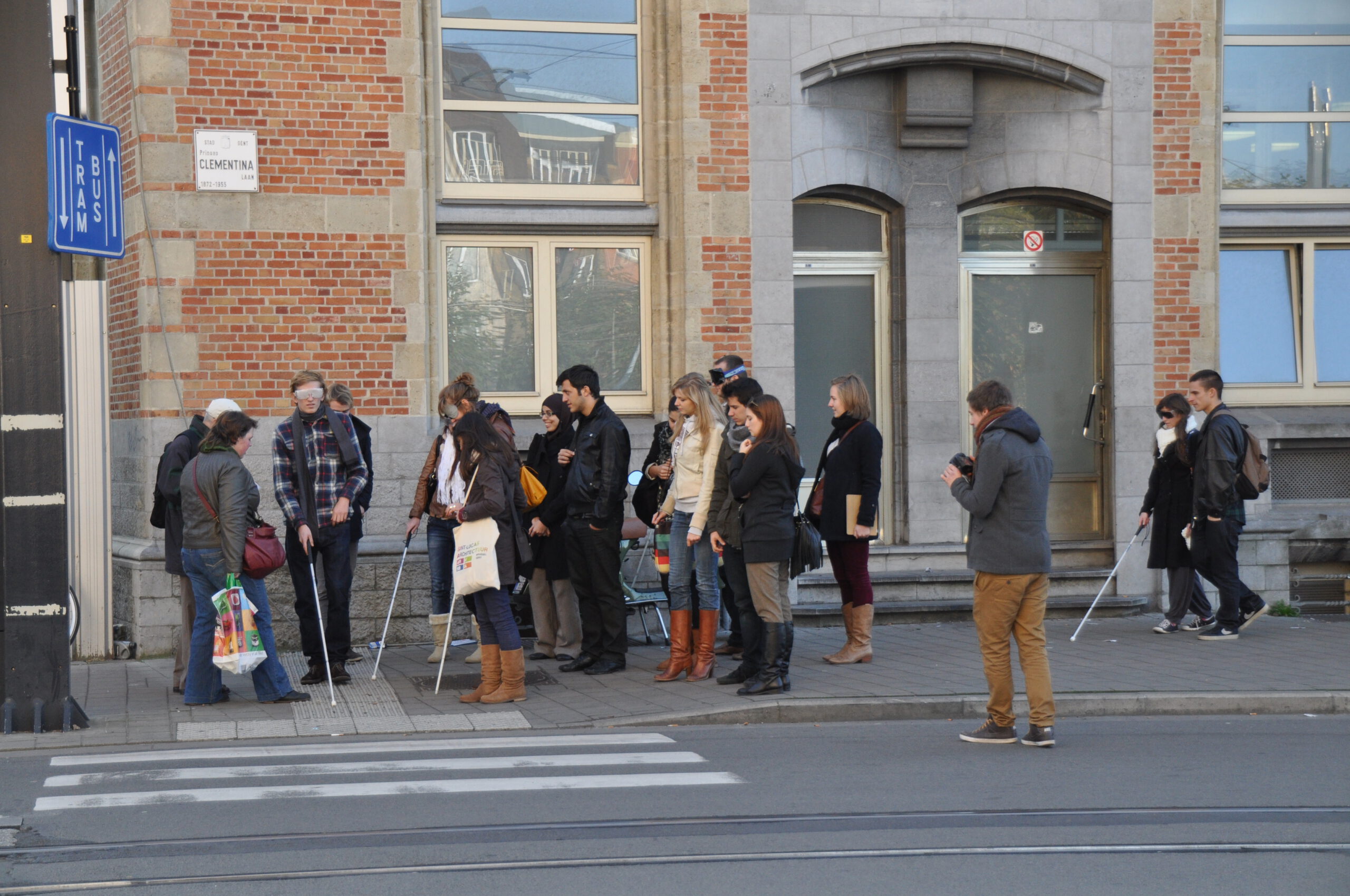
RESEARCH
The UD-APP is a research project by Marc Dujardin in close co-operation with architect Robin Julien. More than a hundred POE’s (Post Occupancy Evaluations) of so to say ‘exemplary’ architecture in Flanders learns that design-based issues and parameters of accessibility rather receive attention as a mere technical subsidiary aspect at a very late phase of the project. It may well be that the specificity of the design task ( i.e. the public function of the building within the healthcare sector,..) enforces the designer to comply to the minimal standards and rules of the new Flemish Accessibility Act (2010) but hardly results into integrated and inclusive concepts, modes of design and production.
UNIVERSAL DESIGN
The gap between the virtual world of creative imagination of the designer (architecture for architects) and the multi-sensorial experiential realm of the diversity of end users seems unfathomably deep. Making a site or building more accessible in too many cases seems to result of a refurbishment of an advanced architectural project and in worst case scenario of the built project upon completion. This can only lead to ‘stigmatizing’ technical additions (e.g. mono functional ramps,..) merely addressing the accessibility of one single target group – wheelchair users. These solutions are nothing but outdated concepts of “Design for Special Needs” and have nothing in common with the spirit of Universal Design.
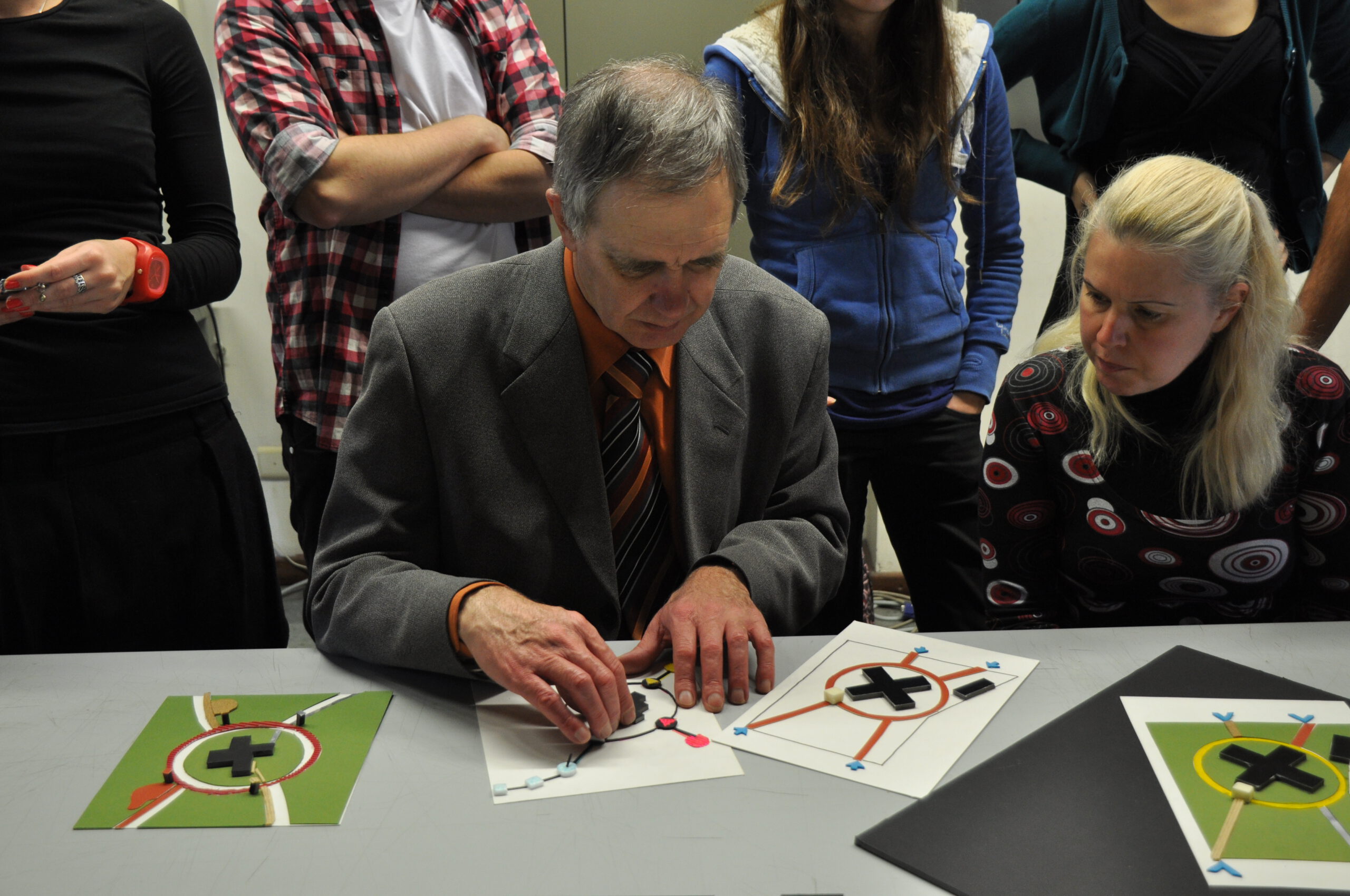
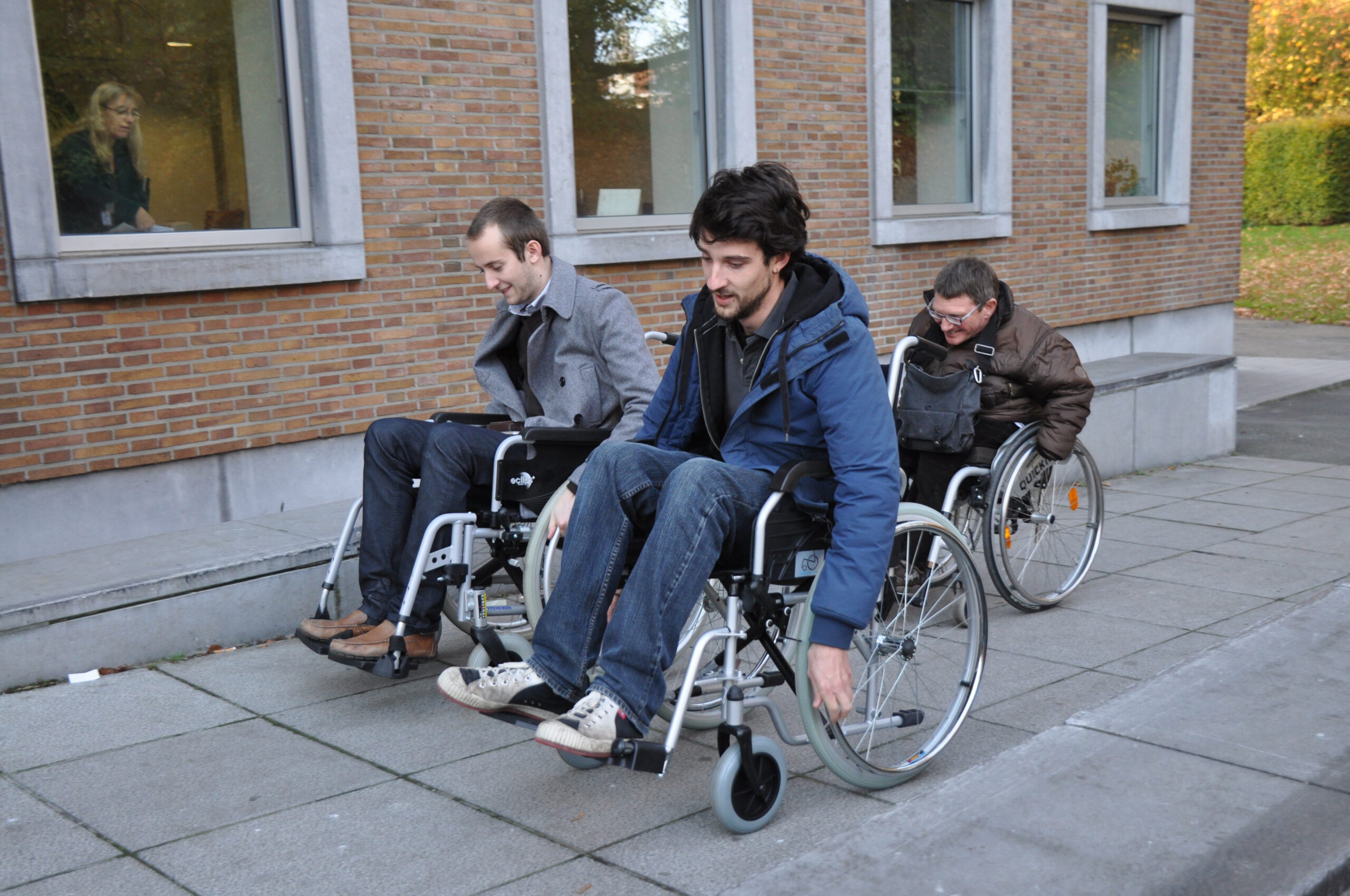
UNIVERSAL DESIGN FOR LEARNING
The joint research project (Universal Design Education Project (UDEP.be), the publication of the first Universal Design Toolkit (2006) and a variety of projects in close co-operation with The Department of Equal Opportunities (Flemish Government), the centre of excellence in accessibility issue (ENTER vzw), the City of Ghent and the conceptual and technical backstopping for the international Schindler Award competition, formed the thinktank and working framework to explore and shape the ‘social’ role of architecture within the Faculty’s teaching framework.
EMPATHY GUIDE
In essence, the UD-APP is a kind of ‘empathic and practice-oriented design grammar, built along the principles of a design matrix. It connects and interrelates a diversity of human profiles of persons with enabling/and or dis-enabling impairments (blind, low vision, deaf, hearing loss, physical, intellectual, obesity, pregnancy, children,…) to the ‘chain of accessibility’ (to reach, to enter, to use and to understand a site, a building, an interior, and object,…).